
Giving ordinary people a voice in society

Who We Are       About Our Films       For  Schools       Partnerships       News       Events & Screenings       Contact Us      

 Films + Groundswell


Food Patriots


2011 End of Year Newsletter


By Jeff Spitz
Share this Article
Post on Facebook
Post on Twitter
Email Story

Dear Friends of Groundswell,

We live in a time of smart phones, 24/7 screen culture and increasing inequality between haves and have nots. As documentary filmmakers we have the ability to make a difference. Groundswell catalyzes and communicates that difference.

The Return of Navajo BoyOur Groundswell model for social change is now recognized by tribal officials, federal agencies, law schools, environmental organizations, media critics, philanthropists, educators and students. What does Groundswell do?

Our Groundswell team transfers skills to disadvantaged communities. We create films, websites, social media, curriculum and live events featuring stories from marginalized communities. We amplify remarkable but unheard-of voices. We inform mainstream media. We put pressure on responsible parties. In the Navajo Nation we give voice to the voiceless and help the tribe advocate for the clean up of Cold War uranium contamination.

We are very pleased to announce two new projects currently in production:

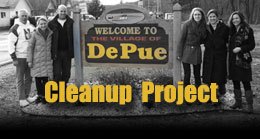
The DePue ProjectGroundswell is working with residents and the Mayor in the Village of DePue, Illinois. Home to a now shuttered zinc mill and it’s vast mound of contaminated waste, this tiny hamlet of 1,800 mostly minorities has been declared a Superfund site. The long promised cleanup, delayed for more than a decade, remains a pipe dream. Contaminants from the waste permeate groundwater and seep into Lake DePue, a precious natural resource.

The Village, local schools, and Northwestern University’s environmental law and chemistry programs invited Groundswell to lead a new media campaign that will give voice to residents and put pressure on the responsible parties, Exxon and CBS/Viacom.

Food Patriots LogoAre you hungry for change? Food Patriots is a new documentary film in progress about trying to raise chickens in our own backyard while seeking stories of people who are changing the way Americans eat, buy and think about food. Have you got a good food story?

Your donation helps Groundswell give voice to the voiceless and bring people together across all the boundaries that typically divide. We appreciate your continued support.

Wishing you peace, good health and fresh eggs in the New Year.

Sincerely,
   – Jeff & Jennifer
  Groundswell Co-Founders

     Permalink to this item     Leave a comment


Navajo Boy Moves Mountains, Literally!


By Jeff Spitz
Share this Article
Post on Facebook
Post on Twitter
Email Story

Dear Friends of Groundswell,

As Japan struggles to contain a radioactive catastrophe, Groundswell’s Return of Navajo Boy project reminds us of the legacy of radioactive contamination from the nuclear industry at home. Amid the tragic legacy, there is finally some good news.


Above: On March 30, 2011, remediation work finally begins at the abandoned Skyline Mine in Elsie’s Backyard!


Above: Jeff and Elsie meet for the very first time in May, 1997. Elsie holds a photo of herself as a child that Jeff brought back to Monument Valley.


Above: Elsie greets attendees after a screening of “The Return of Navajo Boy” at University of Idaho’s Sapatq’ayn Cinema Film Festival, March 26, 2011.

This week, after four decades of neglect, the US EPA quietly began a multi-million dollar clean up of the radioactive waste in Elsie Begay’s backyard. Elsie is the Navajo matriarch in The Return of Navajo Boy film who lost two children to radiation related cancers.

The job of removing many tons of highly radioactive waste from one Navajo family’s backyard will take at least 4 months and cost approximately $5 million they say. The waste cannot be “cleaned up.” EPA will put it into a very large container, cover it and surround it with a fence. Groundswell along with Elsie and other Navajo family members have worked tirelessly over the last eleven years for this outcome.

The US Dept of Energy under the present administration is proud of this environmental justice story. They have invited Groundswell to come to Washington DC to present the film, epilogue and whole Navajo Boy story of media, advocacy and social change at the State of Environmental Justice Conference on April 28th and 29th. They are also sponsoring travel for the Navajo speakers.

While we celebrate the victory for Elsie’s family in Monument Valley, UT, there are more than 1,000 abandoned uranium mines in the Navajo Nation. Many Navajo families are dealing with radioactive contamination and grief that simply cannot be contained.

Our method–telling the story from a Navajo point of view, amplifying voices through media and moving audiences to action—now moves mountains. Our success would not be possible without a network of supporters who book Groundswell programs to raise awareness and help fund our outreach efforts.

Thank you, Bill Kennedy, for inspiring an uncertain journey to give your dad’s movie back to the Navajos in 1997 and for bringing all of us together again for an unforgettable premier at the Sundance Film Festival. Thank you, Native American Public Telecommunications for broadcasting the film nationally on PBS. Thank you, Bradshaw-Knight Foundation, for supporting the production of an Epilogue in 2008 as well as the Groundswell advocacy campaign that brought the film, Elsie, and Navajo tribal officials into the halls of congress. Thank you, Ira Ziering, the Ziering Family Foundation, and several individual donors for supporting our ongoing outreach and webisodes. Thank you, Dan Amdur, for providing Groundswell with a great place to work.

Thanks to you all for helping us build a Groundswell for environmental justice.

           – Jeff Spitz & Jennifer Amdur Spitz
          Groundswell Co-Founders

     Permalink to this item     Leave a comment


Navajos & You Build Groundswell


By Jeff Spitz
Share this Article
Post on Facebook
Post on Twitter
Email Story

Dear Friends of Groundswell,

Just last week we sent you an email updating you on our efforts to keep the story of uranium contamination on Navajo Nation in the news. Our award-winning film “The Return of Navajo Boy” and our outreach has kept up the pressure to clean up the radioactive waste that litters the reservation.

We also asked for your donation to keep producing our Navajo webisode series which brings Navajo voices to the front of this issue. We were humbled by the response– every donation made and every DVD bought will keep us moving forward on this issue. Thank you!

Today we have another big update– the Salt Lake Tribune has a major story on uranium contamination and cleanup efforts which highlights the tireless advocacy of Elsie Mae Begay, whose story is told in our film. The Tribune writes:

On the public front, the Chicago-based group Groundswell Educational Films continues its campaign to bring attention to the legacy of uranium on the Navajo Reservation. Its 2000 film “The Return of Navajo Boy,” which features Begay’s family, is used as an educational tool to raise awareness on and off the reservation.


Now Groundswell maintains a Web and Facebook presence and helps Begay land speaking engagements nationwide. In addition to appearances and “Navajo Boy” screenings around the West, it has underwritten her travel to speaking engagements in the nation’s major cities, including Los Angeles, New York, Washington, D.C., Chicago and Philadelphia.

Keep reading the article to see what the Tribune had to say about our Navajo webisode series.

Can you make a tax-decuctible donation today to help us keep moving this story forward with Navajo voices into 2011?

We appreciate all your support and wish you health and justice in the new year.

           – Jeff & Jennifer
          Groundswell Co-Founders

Visit our website at www.groundswellfilms.org

     Permalink to this item     Leave a comment


EPA To Clean Up Navajo Family’s Backyard in 2011


  • ;:
By Jeff Spitz
Share this Article
Post on Facebook
Post on Twitter
Email Story

It’s been a long time coming. In September the EPA committed funds to clean up the Skyline mine and all the high level radioactive waste in the backyard of Elsie Begay, the star of our documentary, “The Return of Navajo Boy“.

EPA officials cited Elsie’s efforts and our campaign to educate others as the reason they moved this location to the top of a long priority list. EPA plans to relocate Elsie and family in the spring for approximately 4 months while experts in hazmat outfits dig up several tons of radioactive ore and truck it to the top of the mesa where a new repository will be established.

We are training local Navajo residents to cover this story for a new web series and we need your support. Click to select a level for your donation.

     Permalink to this item     Leave a comment


Groundswell Wins New Grant for Food Stories Project


  • ;:
By Jeff Spitz
Share this Article
Post on Facebook
Post on Twitter
Email Story

The Bradshaw-Knight Foundation in Madison, Wisconsin approved Groundswell’s proposal for a grant to support action research for a documentary and public engagement campaign focusing on the rise of the fresh food movement.

Urban agriculture visionaries such as Will Allen of Growing Power in Milwaukee and Ken Dunn of City Farm in Chicago are just two of the participants in this project. Groundswell is organizing public conversations about the hidden cost and health impacts of industrial agriculture. This new project presents the untold stories of ordinary people who are struggling to grow real food in vacant city lots, public school yards, ethnic communities and leading universities.

Do you know a great food story that reveals a hidden cost of the industrial food system? Share your stories with us (email jeff@groundswellfilms.org).

     Permalink to this item     Leave a comment


Groundswell’s Research Uncovers New Link to Fresh Food


  • ;:
By Jeff Spitz
Share this Article
Post on Facebook
Post on Twitter
Email Story

Groundswell’s action research explores the rise of the fresh food movement and involves making short videos about untold stories from the field.

Did you know that the City of Chicago’s farmers markets began to accept food stamps (a.k.a. the LINK card) only this summer? We were shocked that it has taken so long and that only a few markets can participate in this pilot program. Help us spread the word just by sending this video link to others. Lights! Camera! ACTION RESEARCH!
“The video is a smash hit!”, said Connie Spreen of Experimental Station. Spreen’s group developed the pilot program and uses this new video to raise awareness.

USDA director of public affairs Alan Shannon emails the video to raise awareness about the program. “I have been sending it everywhere since seeing it for the first time at our Good Greens meeting. Wonderful work! I’m just preparing a message with a link to it which will go to our entire Good Greens mailing list.”

     Permalink to this item     Leave a comment


Robben Island Singers Rough Cut Goes to South Africa


  • ;:
By Jeff Spitz
Share this Article
Post on Facebook
Post on Twitter
Email Story

The cinematic journey of three singing ex-political prisoners traveled full circle when Muntu Nxumalo (musical director) presented our 90 minute rough cut of the film in Kwa Mashu, the largest township in Kwa Zulu Natal – home township of the singers. Muntu arranged with Edmund Mhlongo to show the film to youth involved in performing arts and media at Ekhaya Multi-Arts Center.

Muntu reports that South African high school students know very little about apartheid and the struggle for liberation and that they were in fact astonished to see the ex-prisoners engaging with American high school students and news reporters in Chicago. Muntu says the emotional impact of this story is very powerful because parents such as himself have found it difficult to talk about their prison years. Local audiences told Muntu they want more scenes in the film about apartheid, Robben Island prison and the musical response of today’s South African teens.

Consider joining our Producer’s Circle by donating $1,000. Your contribution will help cover the cost of editing the rough cut. Click here to donate.

     Permalink to this item     Leave a comment


Groundswell Video: A LINK to Fresh Food


  • ;:
By Jeff Spitz
Share this Article
Post on Facebook
Post on Twitter
Email Story

We are in the beginning stages for our new Groundswell documentary film & public engagement campaign focusing on the rise of urban agriculture and the growing fresh food movement. We want to share our discoveries with you.

Click this link to follow us in Chicago.

Now you can help folks get fresh food just by sending this LINK to others. Did you know that several of the city’s farmer’s markets now accept food stamps (aka the LINK card)? It’s a first, a pilot program that deserves support. Pass it on.

     Permalink to this item     Leave a comment


Ex-Robben Island Prisoners Recall Their Own World Cup Soccer League in Prison


  • ;:
By Jeff Spitz
Share this Article
Post on Facebook
Post on Twitter
Email Story

If the spectacle of World Cup Soccer in South Africa inspires you, a new film by ESPN, titled Outside The Lines, will make your day. Outside the Lines is a remarkable short film that reveals a little known chapter in the history of South Africa.

Did you know that political prisoners at Robben Island Maximum Security Prison created their own league including hand-sewn uniforms, hand-made trophies and original cheers? Two of the Robben Island Singers, Munt and Grant, played in this league. Their team was called Jaws. The loudest cheerleaders on the sidelines were known as howlers. The film weaves interviews with gritty reenactments and gorgeous location cinematography. Watch it to see how political prisoners from Robben Island can inspire the world.

Visit our project website for more about our own documentary, Robben Island Singers.

     Permalink to this item     Leave a comment


The Garden Explores a Community’s Fight to Save the Nation’s Largest Urban Farm


  • ;:
By Jeff Spitz
Share this Article
Post on Facebook
Post on Twitter
Email Story

From the tilled soil of an urban farm to the polished marble of City Hall, this engaging documentary follows the plight of local farmers in East Los Angeles as they speak out in defense of their land.

Many issues are raised as the film questions why the land was sold to a wealthy developer for millions less than fair-market value and why the transaction took place in a closed-door session of the LA City Council without the public’s knowledge.

All the powers-that-be have the same response: “The garden is wonderful, but there is nothing more we can do.” For more information about this 2009 Academy Award-nominated documentary, or to watch a trailer for the film, visit www.thegardenmovie.com

     Permalink to this item     Leave a comment


Groundswell screens “The Return of Navajo Boy” on the Rez


  • photo: Watch more Return of Navajo Boy webisodes.
By Jeff Spitz
Share this Article
Post on Facebook
Post on Twitter
Email Story

The Rough Rock Chapter House in Arizona recently invited Groundswell and Perry Charley to screen and discuss the film with residents.

The screening took place in the old trading post and the film was projected onto a bedsheet. Perry H. Charley, Navajo Nuclear scientist and uranium education expert appears in the new epilogue for the film. He frequently shows it to students at the tribal college, Dine College.


Above: Perry H. Charley, Director, Dine College Environmental Institute leads Q&A after The Return of Navajo Boy at Rough Rock Trading Post.

Perry uses the film to introduce audiences to the Navajo perspective on colonization, manifest destiny, and media. He leads discussions about the Navajo conceptions of healing, family history, native knowledge, research, teamwork and environmental science. Perry is a master teacher whose previous work experience includes heading the Navajo office responsible for the abandoned mines and uranium mills. Every agency that is responsible for the legacies of Uranium mining consults with Mr. Perry H. Charley. We are proud to work with Perry and his remarkable students at Dine College.


Above: Groundswell co-founder, Jeff Spitz, with the media team staff at Northern Navajo Medical Center, Shiprock, NM.

Above: Watch a slideshow of photos taken by Groundswell intern Mitch Wenkus on the recent trip to Navajo Nation.

     Permalink to this item     Leave a comment


Playing for Change: Peace Through Music


  • photo:  
By Jeff Spitz
Share this Article
Post on Facebook
Post on Twitter
Email Story

Can music change the world? Judging by the reach and impact of the Playing for Change movement, the answer to the question is a resounding “yes!”

Many of you may remember the viral Stand by Me video that made the rounds a few years ago. With tens of millions of views on Youtube alone, this “little experiment” has become an international sensation creating a veritable global Groundswell. The song transformed Playing For Change from a small group of individuals to a global movement for peace and understanding.

More on Playing for Change

Playing for Change is a multimedia movement created to inspire, connect, and bring peace to the world through music. The idea for this project arose from a common belief that music has the power to break down boundaries and overcome distances between people. No matter whether people come from different geographic, political, economic, spiritual or ideological backgrounds, music has the universal power to transcend and unite us as one human race.

Now, musicians from all over the world are brought together to perform benefit concerts that build music and art schools in communities that are in need of inspiration and hope. In addition to benefit concerts, the Playing for Change band also performs shows around the world. When audiences see and hear musicians who have traveled thousands of miles from their homes, united in purpose and chorus on one stage, everyone is touched by music’s unifying power.

For further information, visit the Playing For Change website.

     Permalink to this item     Leave a comment


Groundswell Collaborates with Theater Company


  • photo: Groundswell co-founder Jeff Spitz poses next to a Robben Island Singers display at Remy Bumppo Theater in Chicago.
By Jeff Spitz
Share this Article
Post on Facebook
Post on Twitter
Email Story

For the first time, Groundswell is collaborating with a theater company, Remy Bumppo, to cross-promote The Robben Island Singers and the Chicago Theater Company’s new production of the famous South African play, The Island by Athol Fugard. The play runs through March 7th, 2010.

Groundswell now has created a special exhibit in the theater’s lobby featuring The Robben Island Singers recorded music, video, newspaper articles and large photographs featuring the Robben Island Singers in Chicago’s schools. This new portable exhibition of the Robben Island Singers is now available for museums, conferences, consulate offices and other installations.

The Robben Island Singers music is also available for purchase in the theater lobby.

     Permalink to this item     Leave a comment


Invisible Children: Creating a Groundswell With a Rough Cut


  • photo:
By Jeff Spitz
Share this Article
Post on Facebook
Post on Twitter
Email Story

A simple film project from USC has evolved into a powerful force for improving the lives of children in Northern Uganda.

In 2003, three young filmmakers went to Africa in search of a story. They found a horrible situation that disgusted and inspired them. Their response, a modest documentary called Invisible Children: Rough Cut triggered a movement that has mobilized hundreds of thousands of people to raise awareness and protect innocent children who are at risk of being abducted every night by militias – militias that threaten to murder them unless they agree to become child soldiers.

The filmmakers focused on creating change through the power of story, film, and peer to peer organizing but they didn’t stop there. Additional programs now include teacher exchanges, education programs, scholarships (690 for secondary students and 180 full ride scholarships to university), and other development initiatives all aimed at making a difference in the lives of children surrounded by Africa’s longest-running war.

A screening/discussion event is scheduled for April 14th in Chicago at Loyola’s Water Tower campus. For more information, visit Invisible Children’s official website.

     Permalink to this item     Leave a comment


Obama’s Anti-War Stance: What Changed?


  • ;:
By Jeff Spitz
Share this Article
Post on Facebook
Post on Twitter
Email Story

Leave your responses to the video below.

At noon on October 2nd, 2002 I was busy teaching a course called Documentary and Social Change at Columbia College Chicago. My wife, Jennifer Amdur Spitz and many of our friends were involved at that same hour in an old fashioned anti-war rally in Federal Plaza in the heart of downtown Chicago. It would be the first gathering to protest the Bush Administration’s move toward a pre-emptive war against Iraq.

I asked my students if they wanted to leave our classroom and walk to a real anti-war rally. Try to remember how you felt in your gut when President Bush rallied Americans to move fast into a pre-emptive war to prevent America from being attacked with “nuclear,” “biological” and “chemical” weapons – weapons that could be provided to our enemies by Iraq? At the demonstration one of my students, Nahlyee Van Brunt, filmed some of the action with his video camera. Well, documentary and social change do go together whether we realize it or not. Please post your comments about what you think changed. This is a new kind of film experience – a webumentary.

     Permalink to this item     Leave a comment


Connect    With Us Latest    Headlines


Email Us | Join Our Groundswell

Green Fest

Elsie Mae Begay’s Speaking Engagements with “The Return of Navajo Boy” film

Uranium Mines Dot Navajo Land, Neglected and Still Perilous

Film shows impact of uranium mining on Navajo land

What Can Doc Makers Learn from Kony 2012?


Copyright © 2012 Groundswell Educational Films. Login. Chicago Public Relations by Amdur Spitz & Associates.

Reverse phone lookup